Institutional training case study · 2026
Digital Transformation and E-Administration in Government Work
An applied programme for Ministry of Social Affairs and Labour staff, delivered with Al-Anwar for Development
A completed and documented programme that translated digital transformation from a broad concept into applications for transaction workflows, data organisation, archiving, reporting and the safe use of artificial intelligence.
Trainer and facilitator: Dr Tareq AbushawishDelivered in Damascus · 30–31 August and 1 September 2026 · 14 participantsExplore delivery and results↓A privacy-safe professional summary is available; the report and annexes are not downloadable
Work summary
Presentation reviewed:
- Work type
- Delivered institutional training
- Status
- Training completed; follow-up proposed
- Date and scope
- 30 August–1 September 2026 · 9 hours
- Tareq’s role
- Workshop preparation, delivery and facilitation
- Outputs
- Tracking templates, reports and administrative exercises
- Evidence scope
- 14 participants; descriptive observations, no calculated improvement rate
How can digital transformation begin with a real administrative process and convert its data into follow-up, reporting and recommendation before moving to wider automation?
Project at a glance
Context and audience
Applied learning grounded in government transaction workflows.
Beneficiary
Ministry of Social Affairs and Labour and the Directorate of Administrative Development.
Delivery partner
Al-Anwar for Development through documented institutional training cooperation.
Venue and schedule
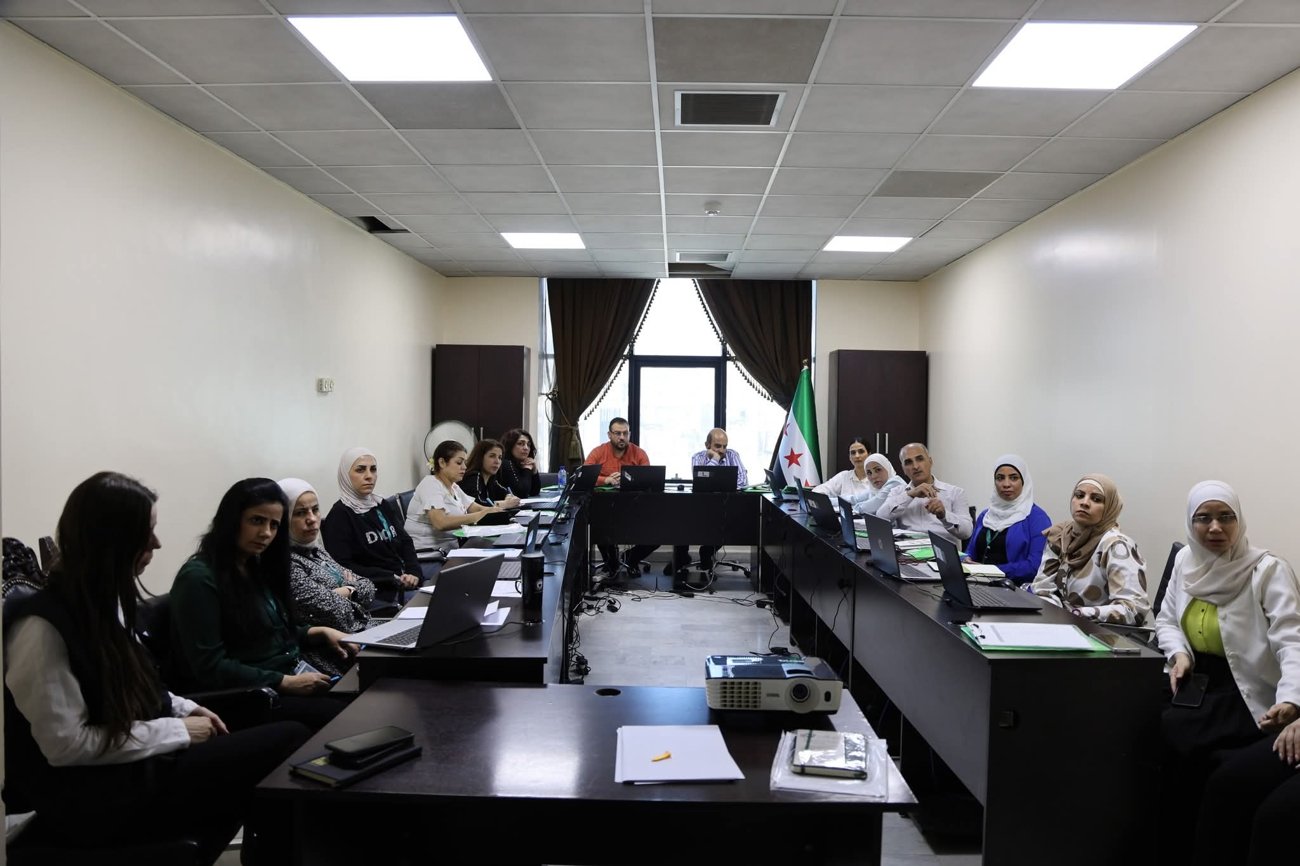
The Ministry training hall in Damascus, three hours per day from 10:00 a.m. to 1:00 p.m.
Participants
Staff working in follow-up, data, archiving, reporting, inspection, planning, recruitment and personnel affairs, with varied digital experience.
Delivered programme
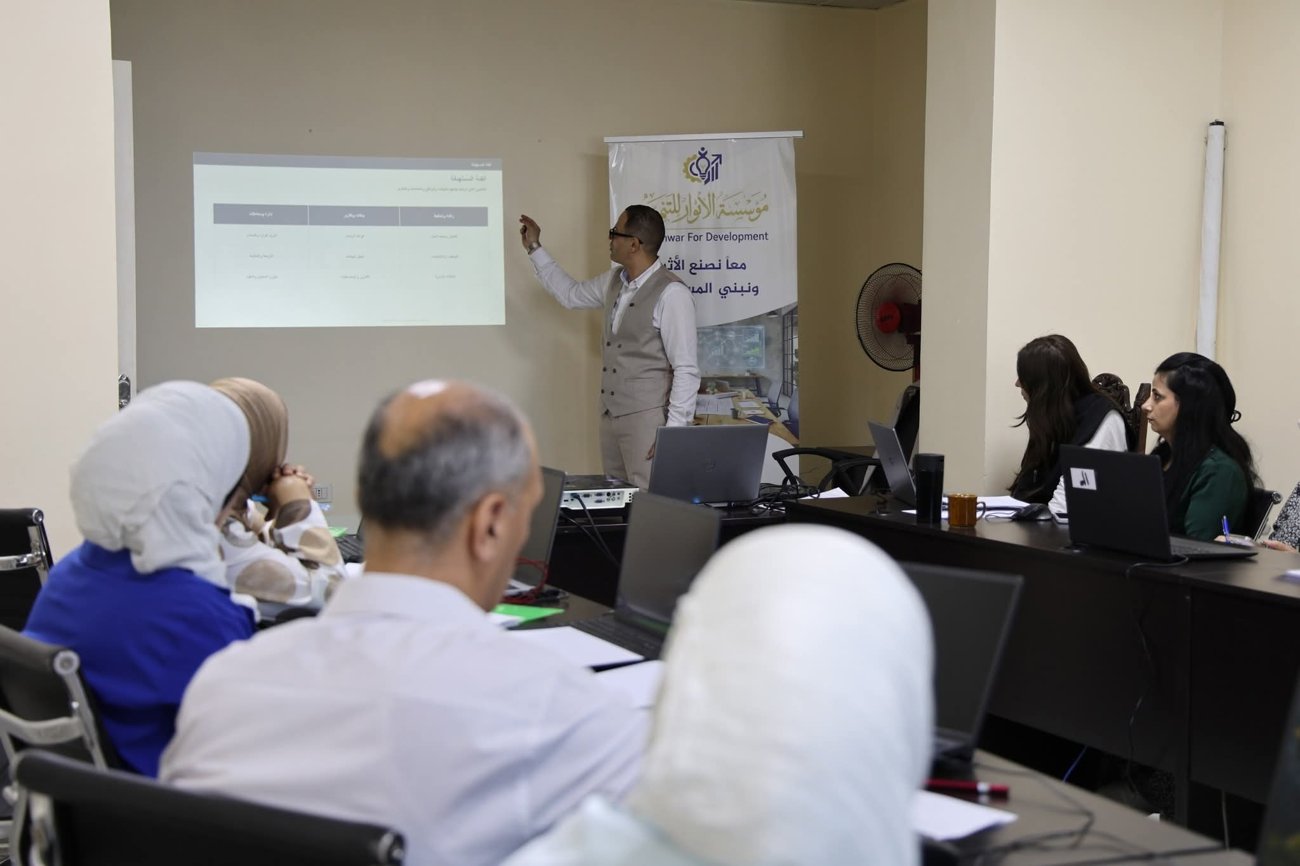
Three days moving from process understanding to an application plan.
Digital transformation foundations and process improvement
Distinguishing digitisation, automation and e-administration, then mapping a transaction workflow and identifying delay and repetition.
Data organisation, archiving and reporting
Building a tracking table, organising correspondence, applying file-naming rules, creating an archive registry and drafting a one-page report.
Case studies and safe use of AI
Analysing applied cases, using digital and AI tools only for non-confidential tasks, and preparing a 30-day application plan.
Learning methodology
Clear explanation, guided practice and work-linked outputs.
Concept clarity
Establish a shared language for digital transformation and e-administration before introducing tools.
Dialogue and group work
Connect content with realistic transaction pathways without using personal or confidential data.
Applied tools
Tracking tables, archive registries, process maps and concise administrative reports.
Professional responsibility
Use AI to support drafting, organisation and preliminary analysis, never as a substitute for administrative judgement.
Field documentation
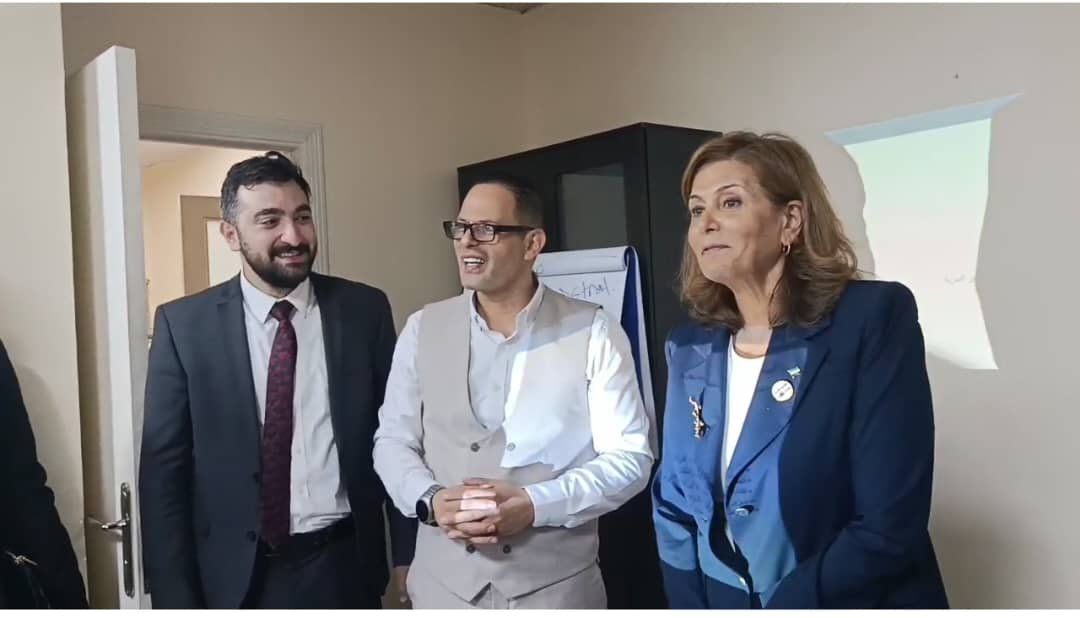
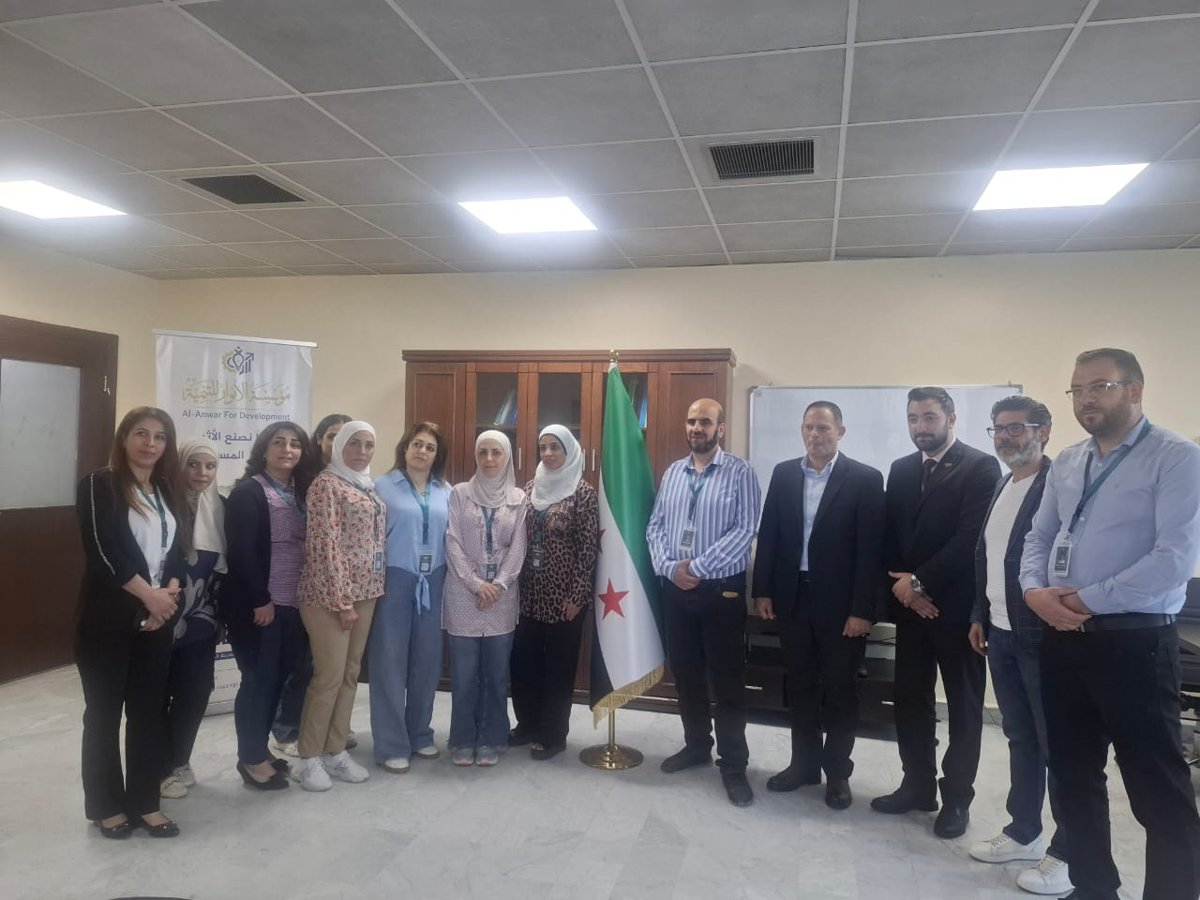
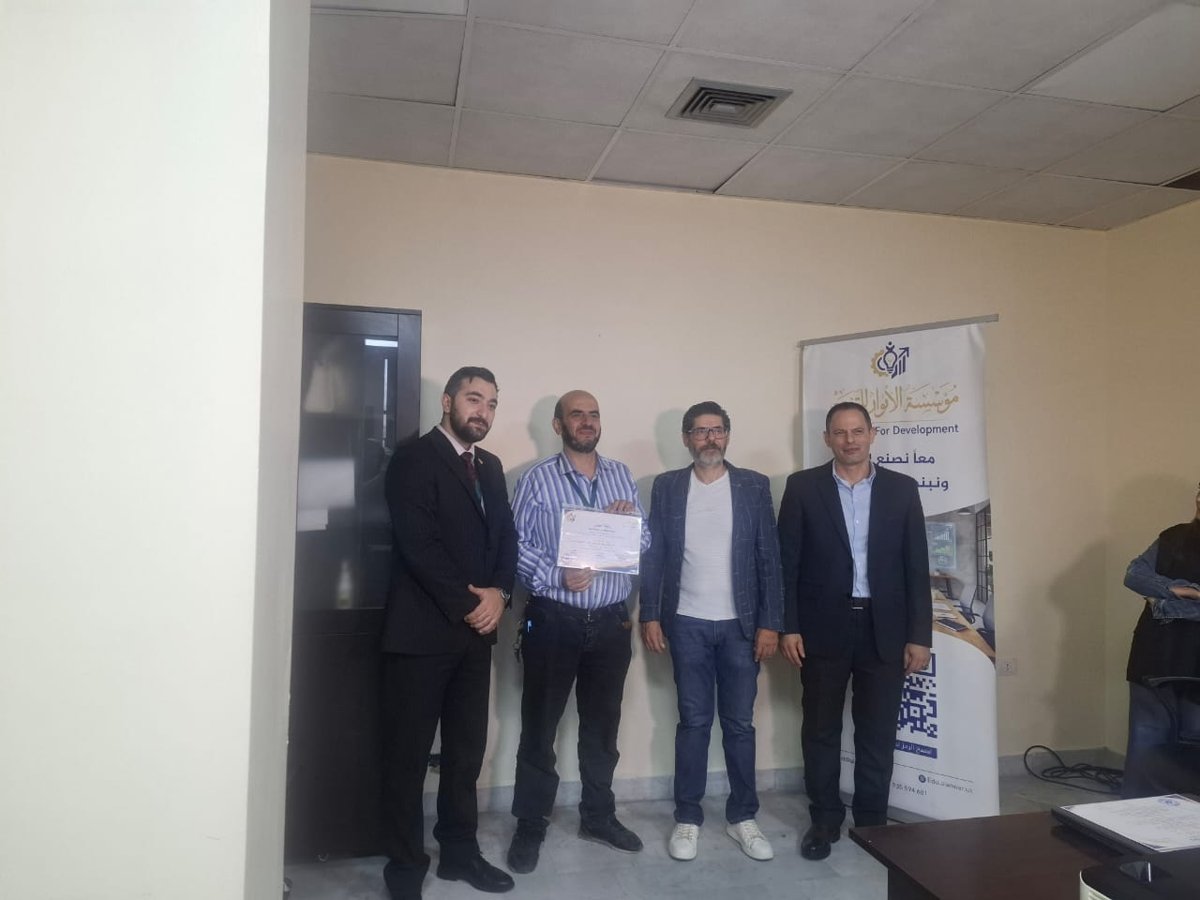
Selected moments from delivery, practice and final documentation.
The photographs document the programme setting and professional delivery. Forms, questionnaires and individual records remain outside public access.
Verified trainer credential
Evidence of preparation and delivery—not an attendance certificate.
Dr Tareq Abushawish
Issued by Al-Anwar for DevelopmentPreparation and delivery of the workshop “Digital Transformation and E-Administration in Government Work” for Ministry of Social Affairs and Labour staff.
Three training days covering workflow analysis, data organisation, electronic archiving, report preparation, and the safe and responsible use of AI tools in non-confidential administrative tasks.
The verified credential summary is public. The signed scan, seals and reference details are retained for professional verification and are not available for public download.Applied outputs
Participants moved from describing delay to diagnosing the transaction pathway.
Priority transaction analysis
Tracked a training complaint case from an executive letter to the decision pathway and identified the main bottleneck.
Administrative transaction report
Converted a resignation or contract-termination case into a report defining ownership, cause, status and next action.
Exit-and-return registry
Proposed a unified register and document checklist before a transaction leaves and after it returns, with a clear review date.
Decision-ready summary
Moved from a data table to a concise presentation of status, reason for delay and recommendation.
An example of the approach
Illustrative transaction follow-up template
Newly composed for this website from the training topics; not an original participant output or a record of an actual transaction.
| Element | Illustrative application |
|---|---|
| Current stage | Identify the transaction’s position in the process |
| Reason for delay | Record any delay and the evidence supporting its explanation |
| Next action | Specify the step and the unit responsible for follow-up |
| Review date | Set a date and review what has been completed |
Measurement and documentation
Four evidence sources, with a clear boundary between description and quantitative measurement.
Pre-training questionnaire
Captured knowledge and skills before the programme.
Safe-use undertaking
Documented the commitment to data protection and avoiding sensitive information in digital and AI tools.
Final/post evaluation
Captured benefit, satisfaction and subsequent training needs.
Applied outputs
Used participant-created models as qualitative evidence of skills applied during the training.
What did delivery show?
Descriptive findings documented through participation, outputs and initial form review.
The paper questionnaires have not yet been digitised into a dataset. The platform therefore reports no uncalculated averages or improvement percentages and limits its claims to the descriptive findings documented in the final report.
- A positive orientation toward practical training connected with real transaction workflows.
- Clear interest in transaction tracking, data organisation and electronic archiving.
- Initial observations of interest in data protection when using digital and AI tools.
- Continued need for applied learning in Excel, digital reporting and process analysis.
Identified training needs
A progressive pathway rather than one general course.
Computer and Excel skills
Transaction-workflow analysis
Time standards and follow-up indicators
Inter-entity exit and return
Archiving and document management
Administrative reporting from data
Data protection and privacy
Responsible use of AI
Change management for leaders
30-day follow-up plan
Test one tool on one transaction before wider rollout.
Status shown: a proposed 30-day plan. This presentation contains no field follow-up results or confirmation that the plan has started; responsibility and a start date should be agreed when it is adopted.
Week one
Select one non-sensitive transaction and complete its basic tracking card.
Week two
Map the workflow and define the steps and standard duration for each stage.
Week three
Record exit, return, delay reasons, responsible follow-up entity and next action.
Week four
Prepare a one-page report covering status, recommendation and review date.
Delivery evidence
From the final report to the trainer certificate and field documentation.
Documented delivery
A bilingual final report records the dates, venue, duration, participant total and content of all three days, supported by a trainer certificate from the delivery partner.
Measurement tools
A pre-questionnaire, safe-use undertaking, final/post evaluations and applied participant outputs.
Sustainability plan
A 30-day follow-up proposal and phased training-cooperation pathway grounded in identified needs.
Document protection
Scanned forms, signatures, participant data and original transaction information are not published.
Responsible access
Results are readable; sensitive evidence is retained for professional verification.
- The complete report, annexes and questionnaires are not available for public download.
- Counts and findings are presented in aggregate; participant names, personal data and signatures are not published.
- Selected photographs and the verified substance of the trainer certificate are shown with the material owner's approval; name lists, signed forms and the raw certificate scan are not published.
- The page documents work delivered with the Ministry and Al-Anwar; it does not imply that TAS represents either organisation.